How to Judge Whether a Cigar Has Entered Its "Drinkability Period" and "Peak Period"
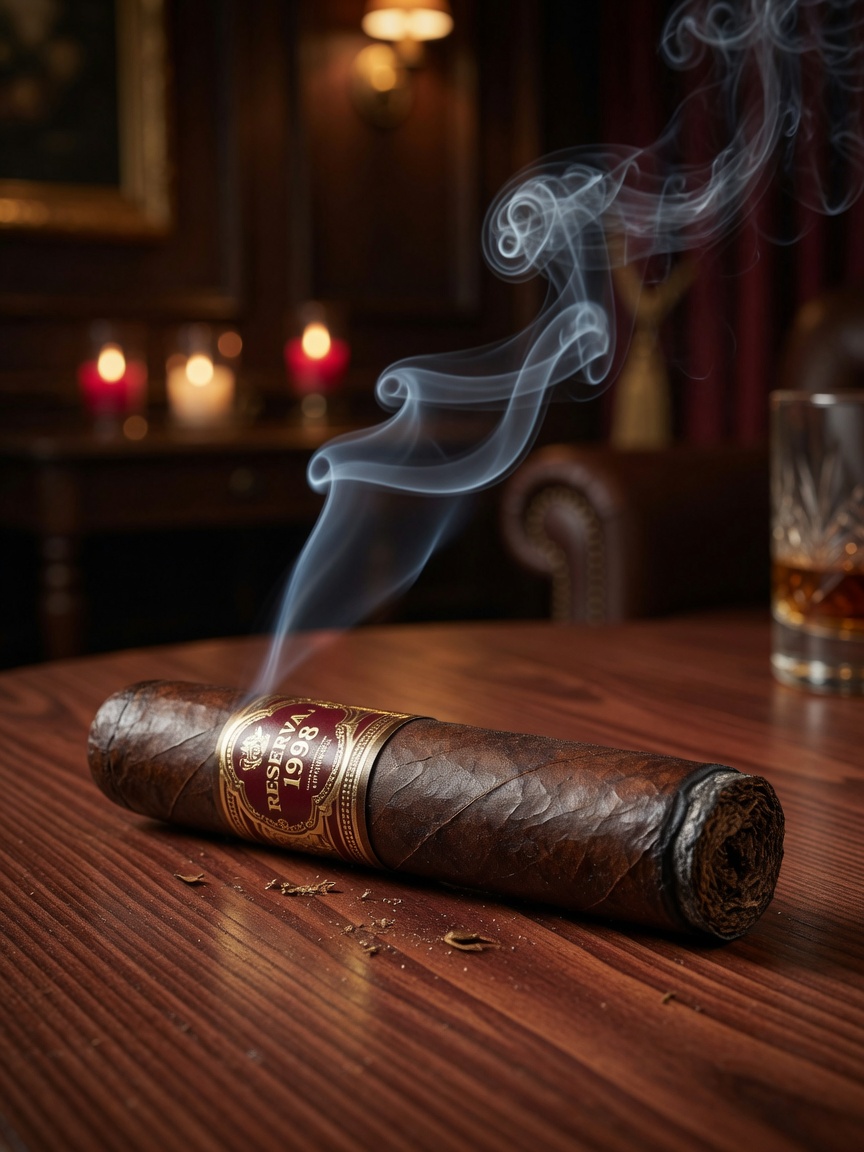
How to Judge Whether a Cigar Has Entered Its "Drinkability Period" and "Peak Period"
I draw a clear distinction between "drinkability" and "peak." Drinkability means "this one is worth lighting—not a waste, not harsh, burns decently." Peak means "waiting won't yield a more complete version, or waiting any longer would only mean a slow loss of oils and aromas." Many people take the box-year label as the answer, but I trust my nose, the ash column, and three consecutive years of comparative records from a single box more.
The standards below come from my actual smoking experience from 2017 to the present—out of a small 18–20°C cigar cabinet in my Shanghai apartment and a portable humidor I occasionally take on business trips to Hangzhou. The numbers will vary by origin, size, and storage conditions, but the judgment framework is reusable.
I. First, Pin Down the Two Terms
Drinkability Period: The ammonia smell has largely faded or is only a very faint background note; the pungency and greenness no longer dominate the first third; the burn maintains a stable ember line; you are willing to light it on an ordinary day. For most regular-size Cuban cigars, I personally start seriously smoking them around 12–36 months after purchase or after they enter my cabinet. New World blends with heavy leaf mixes can sometimes reach drinkability in 6–12 months.
Peak Period: The flavor layers have integrated, the finish shows consistent sweetness with mid-to-late notes of wood, cocoa, and leather, and the harshness has subsided to "structural but not throat-scratching." Smoking two of the same size in a row yields very little variation. For medium-to-full-strength cigars with a tendency toward high tannins, my experience is that you can't really talk about a "peak window" until the 5–15 year range, and the window can last for several years, not just a single day.
In one sentence: Drinkability is "you can drink it," peak is "this bottle is in its right year." Confuse the two, and you either smoke a great cigar too early as "just okay," or treat a stock that's already past its prime as a sacred object.
II. The Timeline: Not a Calendar, But a Trace of Chemistry and Process
The stage divisions commonly used by public sources andexperienced collectors line up with my own sensations. I've rewritten them for a "judgment-oriented" version:
| Stage | Approximate Time (Normal Processing, Stable Storage) | What You Mostly Perceive | How I Use It |
|-------|------------------------------------------------------|--------------------------|-------------|
| Sick Period | Months after rolling to about 1–2 years | Ammonia or "chemical fertilizer" smell in cold draw or smoke, pungent, green, tannic astringency | Observation only, not formal tasting |
| First Maturation | About 2–5 years common | Ammonia largely gone, burn improved, flavors begin to "come together" | Most daily drinkability falls here |
| Window / Transition | Varies greatly by brand and size | Sometimes brief flatness or structural reorganization | Don't conclude it's ruined from one "flat" cigar |
| Second Maturation / Peak Window | Often needs more time, some can reach 10+ years | Tannins further break down, sweetness, fine spices, woody-honey notes become clearer | The real "peak" discussion belongs here |
| Over-Aging Risk | Depends on oils, storage, size | Aroma thins, sweetness collapses, only dry wood or empty shell remains | Still drinkable after peak, but don't mythologize "older is better" |
There's a commonly cited empirical range for ammonia dissipation: it can drop significantly within months, about 95%–99% reduction by the end of the first year, nearly gone by the end of the second—provided the tobacco leaf processing was normal, the size isn't extreme, and storage isn't overly humid or sealed. In 2019 I opened a box of Robusto in Shanghai's Xuhui district that had been bought that year with very messy storage records: the cold draw had a pungent ammonia smell, and after lighting, the first 2 cm felt like smoking unfermented irritant. Another cigar from the same box, left at 65% RH / 17–18°C until spring 2021, had lost the ammonia, though the astringency remained—but it was already "drinkable." That was the first time my body understood: drinkability is not peak.
III. Observable Indicators: Not Metaphysics, But Five Senses + Burn
1. Cold Draw (Unlit)
- Sick / Not yet drinkable: Nose-stinging, ammonia, excessive grassiness, like wet leaves trapped in plastic.
- Entering drinkability: Cold draw is clean, you can identify the tobacco's own flavor, slight sweetness, hints of cedar or cocoa; the irritation doesn't hit the top.
- Approaching peak: Cold draw has layers but not chaos, sweetness and woody/nutty/leather notes feel integrated, less "fighting."
Method: After cutting, take 2–3 gentle draws—don't pull hard and collapse the filler. I use a double-blade cutter; the cut's cleanliness directly affects the cold draw judgment—a crooked cut can make a "blocked" draw read as "still immature."
2. Feel and Elasticity
A cigar before and after drinkability, when stabilized at roughly 65%–70% relative humidity, should have even springback: gently squeeze the middle section, no soft spots, no hard rods. Over-humidified (I once mistakenly pushed my cabinet to 72%+ with temperature above 22°C) becomes soft, stuffy, and the burn becomes sluggish and muddy. Over-dry causes the wrapper to crack easily, the oil feel disappears, and the cold draw feels woody—that's a "storage issue," not "not yet at peak."
For long-term aging, many people lean toward slightly lower humidity and slightly lower temperature (common discussion range around 16–18°C, RH about 65%), while for daily smoking, settings like 19–21°C, RH about 70% are more common. My long-term aging cabinet is locked at 17°C / 65%, my daily cabinet at 20°C / 68%. Humidity fluctuation is more damaging than the absolute value: in the summer of 2020, a two-day power outage sent my cabinet to 28°C; those cigars later all exhibited "smoldering burn + dark ash," and all drinkability judgments were invalidated—they could only serve as teaching samples.
3. Wrapper Oils, Color, and Packaging Marks
- Even oils and a steady, deep color generally indicate that the oils are still present and storage is acceptable.
- The golden/light brown oil stains commonly seen on cellophane sleeves are, under stable humidification, one of the aging traces of oil migration—not a standalone "it has reached peak" proof; you still need to confirm with taste.
- White powder on the wrapper needs differentiation: it could be plume or mold—use smell and magnification. If there's a musty smell, don't gamble.
4. Burn, Ember Line, and Ash Column
I treat the burn as a hard criterion for the "drinkability threshold":
- Even ember line, not too fast, not extinguishing, smoke temperature not too hot: indicates that moisture and structure are coordinated.
- Ash that is light-colored, can hold 2–3 cm before a light tap: common on well-conditioned cigars. Ash that is too dark, hollow, or crumbly: first check humidity and rolling, don't blame "not enough years."
- The peak period experience is often: a more stable burn, smoke that feels "cooler and thicker," flavor release without needing to pull hard.
5. Flavor Structure (First Third / Middle / Final Third)
| Judgment | First Third | Middle | Final Third |
|----------|-------------|--------|-------------|
| Not drinkable | Pungent, ammonia, greenness dominate | Still hard, sweetness can't emerge | Bitter or empty |
| Drinkable | Has structure but controllable | Aroma opens up | Acceptable, not necessarily stunning |
| Peak window | Clean introduction | High integration, layers rotate naturally | Sweet/woody/cocoa finish clearly, long aftertaste |
| Past peak | Thin or only dry wood | Lacks oil feel | Collapsed, dispersed, no aftertaste |
The dryness and pungency from tannins are very common in young cigars; as aging breaks them down, the astringency decreases, and notes like wood-sugar sweetness, earth, cocoa, leather, and dried fruit often become clearer. This is the core chemical story of the "peak" discussion, but when it lands on your palate: astringency recedes, sweetness appears, aromas integrate—these three appearing together are more useful than reciting years.
IV. Empirical Methods: How I Actually Judge a Box
Method A: In-Box Sampling Schedule
When I buy a box of 25 regular-size cigars, my default rhythm (adjustable by strength):
- Rest 3–4 weeks in the cabinet (let transport humidity and new cabinet balance), smoke the 1st cigar, only note "can I drink it," don't judge peak.
- At 6 months, smoke the 2nd cigar.
- At 12, 24, 36 months, one cigar each.
- If at 36 months there's stillobvious tannin hardness and poor burn, continue aging; if already well-integrated, start normal consumption and set aside 3–5 cigars to stretch to 5 years and 8 years for comparison.
For giant sizes (such as very long Churchills / Double Coronas) and strong Ligero blends, I extend each node by 6–12 months. Smaller ring gauges sometimes mature faster, and are also easier to "smoke past" without noticing.
Method B: Three-Line Record (More Useful Than Long Essays)
Each cigar, just note:
- Date / cabinet temperature and humidity readings
- One sentence on cold draw + burn (stable/smoldering/fast)
- One keyword for each of the first, middle, and final thirds + whether "I want another one"
In March 2022, in Shanghai, I laid out the comparison table for a box of medium-strength Robusto that had entered my cabinet in 2018: at 12 months, the keywords were "pepper, astringent, crooked ember line"; at 30 months, they became "cedar, cocoa, stable"; by 2024, smoking the same box, sweetness and leather had come up but the harshness was even lower—I personally mark it as "entering the front half of the peak window" rather than mythologizing it as a "perfect apex." A peak is a period of time, not a checkpoint.
Method C: Dual-Cabinet Comparison (Isolate Storage Variables)
Pair two cigars from the same source: one from the daily cabinet (leaning toward 70% RH thinking), one from the long-term aging cabinet (leaning toward 65% / lower humidity). After 6 months, if the daily cabinet cigar is softer, produces more smoke but with occasional sogginess, while the aging cabinet cigar is firmer and burns cleaner—you're comparing "condition," not "year magic." Drinkability judgment must first rule out storage mishaps.
Method D: Trouble Checklist (Pitfalls I've Experienced)
- Smoking right out of the box as a tasting: In 2018 at a gathering of friends in Guangzhou, I smoked one the same day it arrived; everyone said "this brand is no good." Six months later, the same batch under stable humidity got a completely different verdict. The issue was timing.
- Uncalibrated hygrometer: Cheap ones can be off by 5% RH easily. I now calibrate occasionally using the salt test, or else "drinkability indicators" are all noise.
- Treating oil stains and dark wrappers as peak directly: They only indicate oil activity or sufficient storage time; the taste may still be flat.
- Judging a box by one cigar: Rolling tolerances, position (box edge vs. center), and your own physical state on the day can all skew the result. At least two cigars from the same box before concluding.
- Using the same timeline for New World and Cuban cigars: Many New World cigars are more "smokable" when released; some Cuban strong sizes need more time. Don't apply Opus-level long-aging stories to all daily-smoking cigars.
V. My Personal Standards (You May Disagree, But They Are Actionable)
- Drinkability green light: Cold draw has no obvious ammonia; first third doesn't scratch the throat; ember line is basically stable; I'd give it 70+ points and "want to smoke another."
- Peak mark: Smoking the same size 6–12 months apart, flavor integration and finish sweetness hold steady or improve over two consecutive comparisons, and the burnalways clean. One stunning appearance isn't enough.
- Post-peak warning: Oil feelobvious drying out, aroma thinning,only hollow wood, or you must pull hard to get flavor—start consuming faster, don't be held hostage by "let it age five more years."
- Size weighting: Larger ring gauge, denser filler, higher tannin cigars peak later and the window may be longer; light and elegant daily smokes, enjoy soon after drinkability, do not pursue 15-year stories.
I've written the storage minimum into my habits: away from odors, protected from light, stable temperature and humidity; long-term above about 75% RH sharply increases mold risk; long-term below about 60% easily causes cracking and oil loss. These aren't sentiment, they're boundary conditions for judgment failure.
VI. Mnemonic and Closing
Check if the cold draw is clean, if the squeeze is even, if the ember line is stable, compare with the previous cigar from the same box—is it more harmonious, sweeter, less harsh? Once past the drinkability line, smoke at your preferred pace; only when "structure integrated, finish clear, harshness receded" becomes the norm in your consecutive comparisons should you seriously talk about peak.
Year labels are the map, not the territory. The thermometer in your cabinet, the calibrated hygrometer, and your own few lines of crude records get closer to the truth than any "golden age" slogan. A cigar's peak is ultimately that window for which, after repeated verification, you are willing to slow down your consumption—before that verification, it is merely drinkable or not yet drinkable.
Drinkability
Smokeable, not a waste, not harsh, suitable for daily enjoyment
Peak
Flavor integration perfect, finish clear and stable, worth slowing consumption